
Trail ↔ road effort calculator
On the trail, distance alone is misleading: 25 km with 1,200 m of climbing is a very different effort from 25 km on the flat. This calculator estimates the flat-road effort equivalent of a trail run using a widely-used coaching heuristic — roughly 100 m of vertical gain costs about the same effort as 1 extra km on the flat. Use it to size your trail sessions against familiar road distances.
Effort equivalent
37.0 km — flat-road equivalent
Heuristic: 100 m climb ≈ 1 km flat effort. Real trail times vary with terrain, descents and fatigue.
Races to try it on
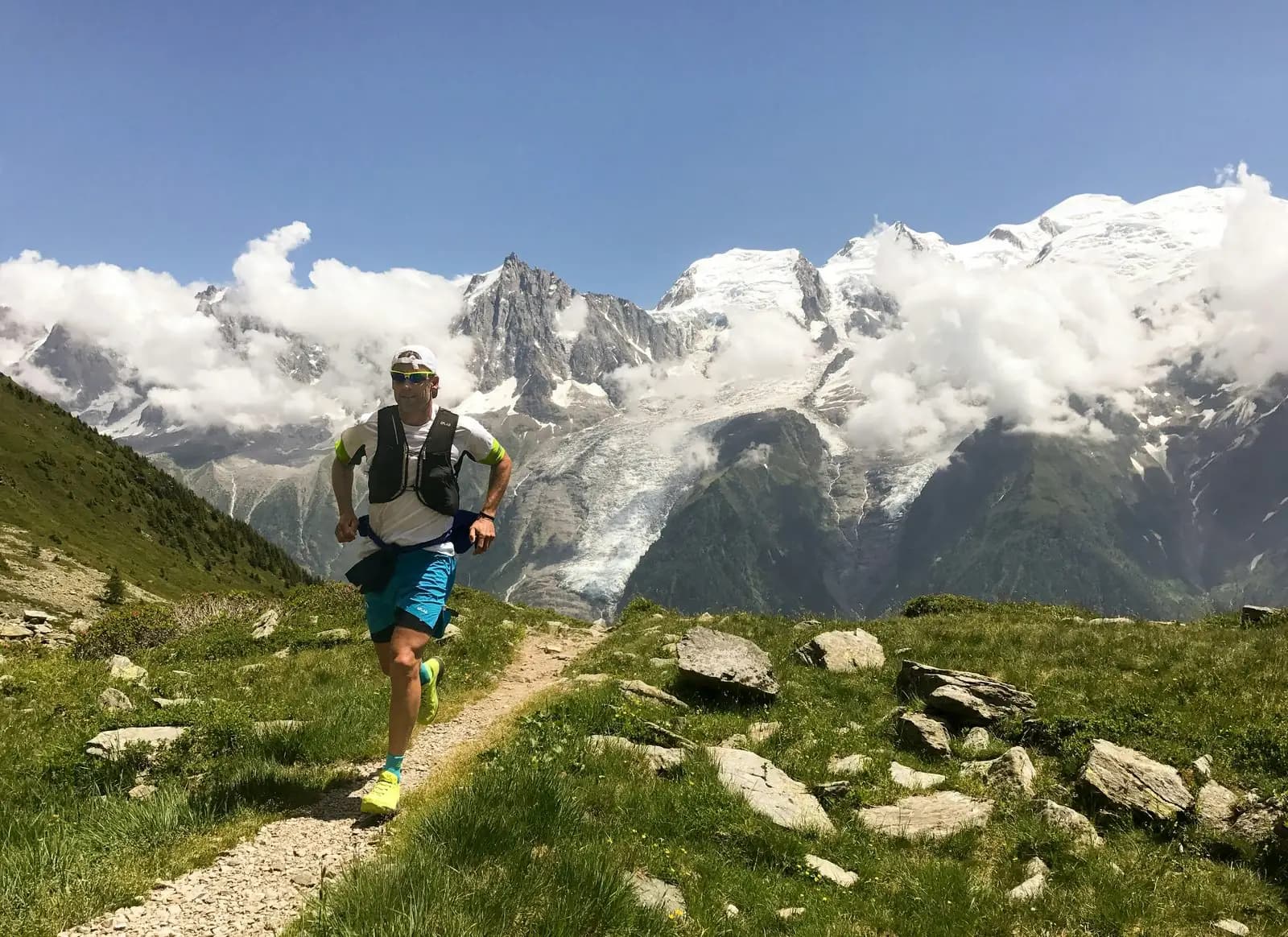
Want a coach that plans by effort, not pace?
Leo sizes your trail sessions by real load — elevation included — and adjusts every week to how you're recovering, instead of a flat pace that means nothing on the trail.
7 days free · cancel in one tap
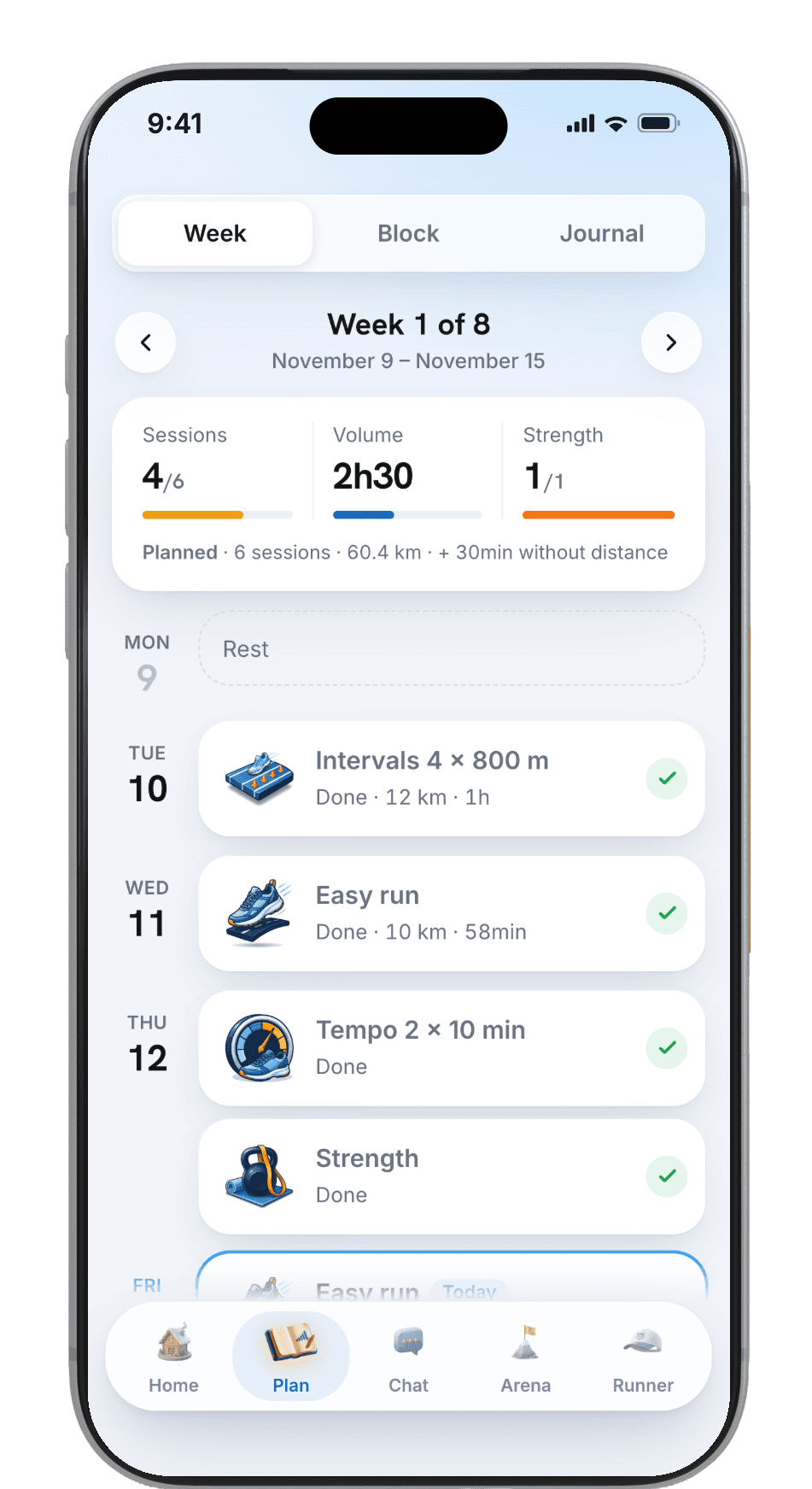
Leo Training reads your runs from Strava, Garmin, COROS, Suunto, Polar, Apple Health or Health Connect, writes your plan from them and adjusts it as the weeks go by. 7 days free, then 9.99 a month or 79.99 a year.
Everything about trail to road effort
Frequently asked questions
How does the calculator work?
Effort-equivalent flat distance = trail distance (km) + elevation gain (m) ÷ 100. Enter your flat pace too and it estimates a ballpark trail time. It's a planning heuristic, not a guarantee. Technical terrain, descents, altitude and fatigue all shift real times.
How do you convert elevation gain to distance?
A common coaching rule: every 100 m of climbing adds roughly 1 km of flat-effort distance. So 25 km with 1,200 m of climbing feels like about 37 km on the flat.
Is this accurate for technical trails?
It's a rough planning estimate. Very technical terrain, steep descents, mud, altitude and night running all slow you further than the formula suggests. Treat it as a floor, not a finish-time prediction.
Why train by effort instead of pace on trail?
Because pace is meaningless across changing grades: your pace collapses uphill at the same effort. Training and racing by heart rate or perceived effort (and power-hiking climbs) is how trail runners pace correctly.
Other tools