Campus Coach, created by Niko Ackermann (Running Addict) and built by MWM (same parent company as Kotcha), offers personalized training plans with integrated nutrition tracking and broad watch compatibility (Garmin, Coros, Suunto, Apple Watch). It includes a web app and mobile apps with Strava sync. Note: Campus removed its free plan in January 2026 — it now starts paid (web from EUR 15/month, in-app from EUR 19/month). Leo emphasizes conversational coaching with specialized coaching tools, persistent memory, and multi-channel access. Campus Coach has a strong French running community following; Leo offers deeper coaching tools and AI flexibility.
Feature comparison
Feature
Leo
Campus Coach
Strava sync
Yes
Yes
Adaptive training plans
Yes
Yes
Body signal tracking
Yes
Limited
Shoe management
Yes
No
Race preparation
Yes
Limited
Scientific knowledge base
Yes
Limited
Coaching memory
Yes
Limited
Multi-channel (web, Telegram, MCP)
Yes
Limited
Conversational AI interface
Yes
Yes
VO2max estimation
Yes
Limited
Character-based community & challenges
Yes
No
Point by point
Coaching approach
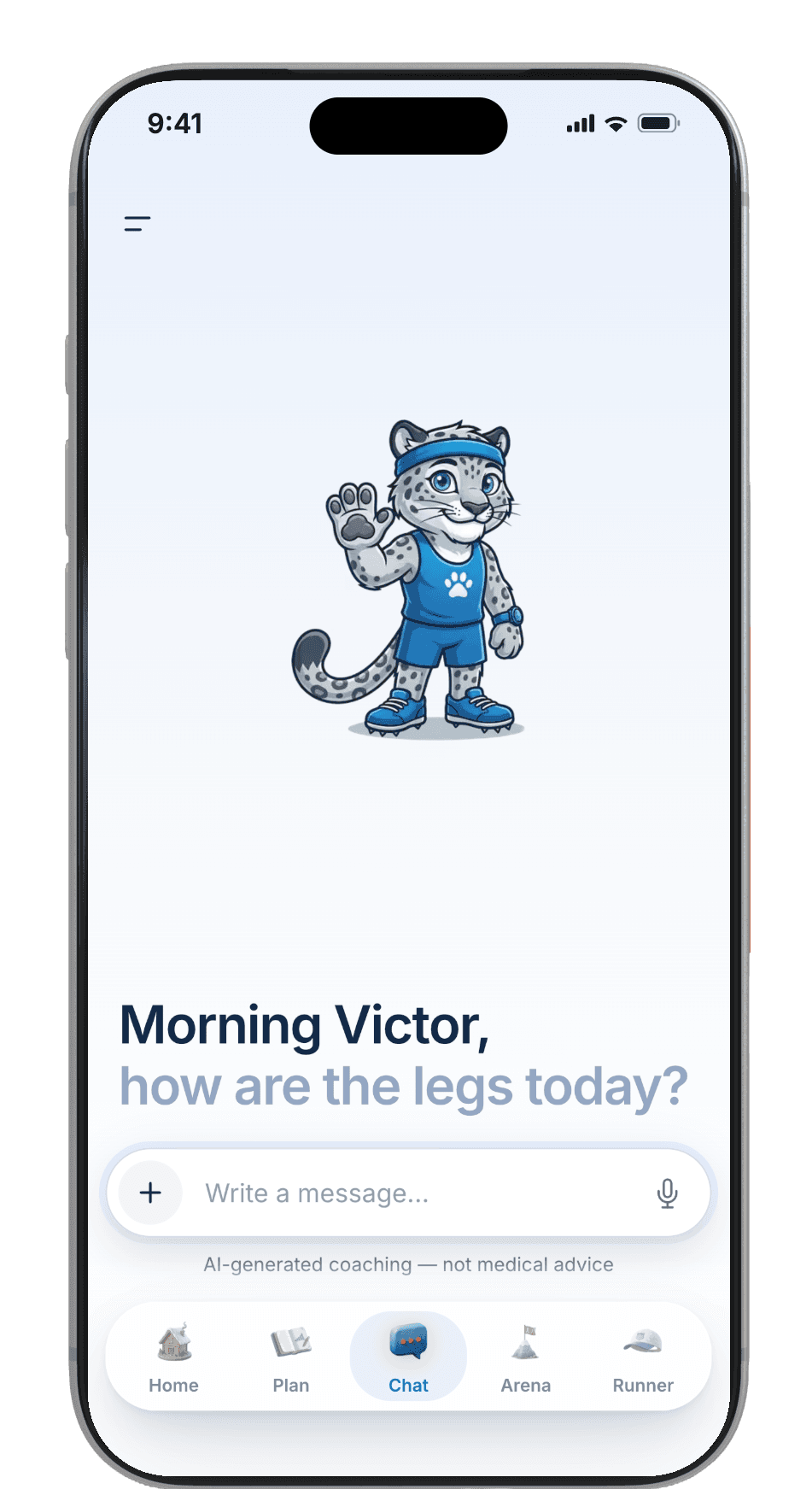
Campus Coach provides AI-generated training plans for 5K, 10K, half marathon, marathon, and trail, with periodic adjustments based on completed workouts. Plans are designed to peak for race day with structured training cycles. Leo goes further with a fully conversational approach: you chat with Leo, debrief sessions, discuss race strategy, and ask training questions. Leo maintains persistent memory across all sessions — he remembers what you discussed last week and builds on it. This creates a genuine coaching relationship rather than a plan-and-track loop.
Unique features
Campus Coach includes a personalized nutrition program with carb intake tracking and fueling comfort assessment — a feature uncommon in running apps. It also sends workouts to Garmin, Coros, Suunto and Apple Watch (not Polar) and provides Strava sync. Leo does not have dedicated nutrition tracking but covers it through the scientific knowledge base and coaching conversations. Leo's unique features include shoe wear inspection with visual scoring, elevation-aware race projections, and VO2max estimation using 3 scientific methods.
Platform and ecosystem
Campus Coach offers both a web app (app.campus.coach) and mobile apps, giving flexibility in how you access training. It was created by Niko Ackermann (Running Addict), a well-known French running content creator, which gives it strong credibility in the French running community. Leo is available as native iOS and Android apps, a web app, on Telegram, and as an MCP server for ChatGPT, Claude, and Mistral. Both MWM products (Campus Coach and Kotcha) share technical infrastructure, which may benefit from cross-platform improvements.
1 / 3
Who should choose what?
Choose Leo if:
You want deep coaching tools (body signals, shoes, race prep, science base), persistent memory, and the flexibility to use Leo via ChatGPT, Claude, or Telegram. You value conversational coaching depth.
Choose Campus Coach if:
You want integrated nutrition tracking, workouts sent to your watch (Garmin, Coros, Suunto, Apple Watch), and a training plan approach backed by the Running Addict community. You appreciate the web app interface.
Frequently asked questions
Is Leo Training better than Campus Coach?
Leo offers deeper AI coaching with persistent memory, body signal tracking, and multi-channel access. Campus Coach offers nutrition tracking, broader watch support, and a strong community. Choose based on your priorities.
Can I use Leo Training and Campus Coach together?
Yes. Both sync with Strava. You could use Campus Coach for nutrition tracking and Leo for conversational coaching and race preparation.
How much does Leo Training cost compared to Campus Coach?
Leo costs 9.99/month with all features included. Campus Coach is paid-only since it removed its free plan in January 2026 (web from EUR 15/month). Leo offers more coaching depth; Campus Coach offers nutrition tracking.
Can I try Leo Training before paying, and does it have an app?
Yes. Leo has native iOS and Android apps, web, Telegram and AI-assistant access (ChatGPT, Claude, Mistral). Like Campus, which went paid-only in January 2026, Leo Training is a subscription: the first 7 days are free, nothing is charged before day seven, and cancelling takes one tap.